
Augmented Reality Experiences: Bridging the Gap Between Digital and Physical Worlds
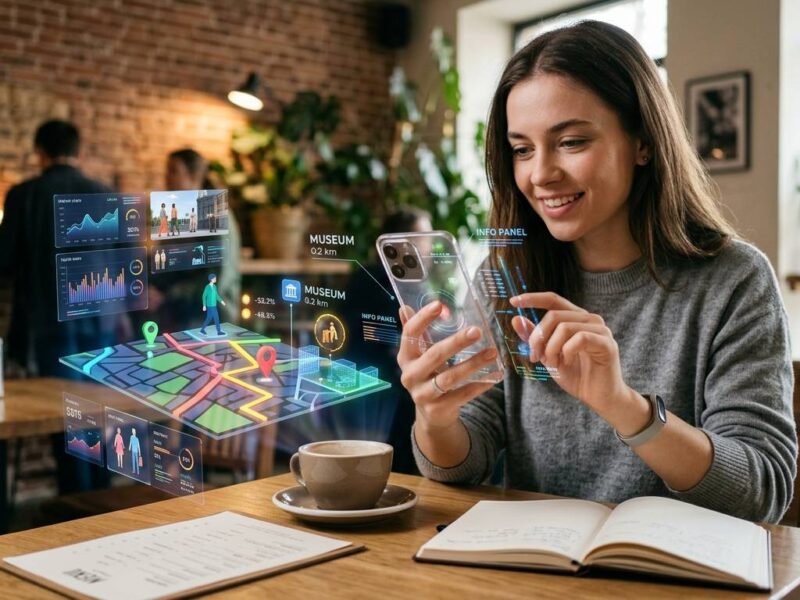
Augmented Reality (AR) is changing the way people interact with technology by blending digital content with the real world. Instead of replacing reality, AR enhances it by adding useful information, interactive objects, and immersive experiences directly into a user’s surroundings.
From trying on clothes through a smartphone to receiving step-by-step repair instructions on smart glasses, augmented reality has become part of everyday life. Businesses, educators, healthcare professionals, retailers, and entertainment companies are all discovering new ways to use AR to improve experiences and solve real-world challenges.
In this guide, we’ll explore how augmented reality works, where it’s being used today, its benefits, challenges, and what the future may look like as digital and physical environments become increasingly connected.
What Is Augmented Reality?
Augmented Reality is a technology that overlays digital elements—such as images, animations, text, videos, or 3D models—onto the physical world through devices like smartphones, tablets, or AR glasses.
Unlike Virtual Reality (VR), which creates a completely digital environment, AR allows users to stay aware of their surroundings while interacting with digital content.
For example:
- Using your phone to see how a sofa looks in your living room before buying it.
- Viewing navigation directions directly on a street through smart glasses.
- Learning anatomy with interactive 3D models in a classroom.
- Playing games where digital characters appear in real-world locations.
The goal of AR is to make digital information feel like a natural extension of the physical environment.
How Augmented Reality Works
Although AR experiences can seem almost magical, they rely on several technologies working together.
Cameras and Sensors
Devices use cameras, GPS, accelerometers, gyroscopes, and depth sensors to understand their surroundings and detect movement.
Computer Vision
Computer vision identifies objects, surfaces, faces, and environments so digital content can be accurately placed in real space.
Simultaneous Localization and Mapping (SLAM)
SLAM technology creates a map of the environment while tracking the user’s position, helping virtual objects stay anchored as users move.
Real-Time Rendering
Powerful processors generate 3D graphics instantly, allowing digital elements to respond naturally to changes in movement and perspective.
Together, these technologies create smooth, realistic, and interactive AR experiences.
Types of Augmented Reality
Different applications use different forms of AR depending on their goals.
Marker-Based AR
This type uses printed images, QR codes, or specific patterns to trigger digital content.
Common uses include:
- Product packaging
- Interactive books
- Museum exhibits
- Educational materials
Markerless AR
Markerless AR detects flat surfaces without needing predefined images.
Examples include:
- Furniture placement apps
- Interior design visualization
- Home renovation planning
Location-Based AR
GPS, maps, and location services display digital content based on where users are physically located.
Popular applications include:
- City exploration
- Tourism
- Outdoor games
- Navigation
Projection-Based AR
Digital images are projected directly onto physical surfaces, allowing users to interact without holding a screen.
This approach is increasingly used in manufacturing, exhibitions, and interactive displays.
Everyday Uses of Augmented Reality
Many people already use AR without realizing how common it has become.
Shopping and Retail
Retailers use AR to help customers make more confident purchasing decisions.
Popular features include:
- Virtual furniture placement
- Makeup try-ons
- Eyeglass fitting
- Shoe visualization
- Clothing previews
This reduces uncertainty and often lowers product return rates.
Education and Learning
AR transforms traditional learning into interactive experiences.
Students can:
- Explore the solar system in 3D
- Examine historical artifacts
- Study human anatomy
- Conduct virtual science experiments
- Visualize complex engineering models
Learning becomes more engaging because students interact with concepts instead of only reading about them.
Healthcare
Medical professionals increasingly rely on AR for improved precision and training.
Applications include:
- Surgical guidance
- Medical education
- Patient visualization
- Physical rehabilitation
- Anatomy simulations
Doctors can better understand patient conditions using interactive 3D visualizations.
Manufacturing and Maintenance
Technicians use AR to perform complicated tasks more efficiently.
Examples include:
- Assembly instructions
- Equipment maintenance
- Quality inspections
- Remote expert assistance
- Industrial safety guidance
Workers receive information exactly when and where they need it.
Real Estate
Property buyers can take virtual property tours, visualize renovations, and see how rooms would look with different furniture or layouts.
Real estate professionals can showcase properties more effectively while helping buyers make informed decisions before visiting in person.
Travel and Tourism
Travelers benefit from AR in several ways.
They can:
- Translate signs instantly
- View historical information at landmarks
- Follow interactive city guides
- Access museum exhibits
- Discover nearby attractions
AR enriches travel without replacing the experience of being there.
Gaming and Entertainment
Gaming remains one of the most recognizable applications of augmented reality.
Players interact with digital characters placed into real environments, creating experiences that encourage movement, exploration, and social interaction.
Entertainment companies are also using AR for live events, concerts, and interactive storytelling.
Benefits of Augmented Reality
AR offers advantages for both businesses and users.
More Engaging Experiences
Interactive content captures attention more effectively than static images or text.
Better Decision-Making
Seeing products in real environments helps customers make more confident choices.
Faster Learning
Visual demonstrations often improve understanding and information retention.
Increased Productivity
Hands-free instructions reduce errors and improve workplace efficiency.
Improved Customer Satisfaction
Interactive experiences make services feel more personalized and convenient.
Stronger Business Innovation
Companies using AR can differentiate themselves while offering modern customer experiences.
Challenges Facing Augmented Reality
Despite rapid progress, AR still faces several obstacles.
Hardware Limitations
High-quality AR glasses remain relatively expensive and are not yet widely adopted.
Battery Life
Continuous camera use, graphics processing, and sensors consume significant power.
Privacy Concerns
AR devices collect visual and location data, raising important questions about privacy and responsible data handling.
Organizations must be transparent about how user information is collected, stored, and protected.
Content Development Costs
Creating accurate, realistic AR experiences often requires specialized design, development, and testing.
User Comfort
Long periods of AR use may lead to eye strain or fatigue if experiences are not designed carefully.
Industries Being Transformed by AR
Many industries are already integrating AR into everyday operations.
These include:
- Retail and e-commerce
- Healthcare
- Manufacturing
- Construction
- Automotive
- Education
- Logistics
- Tourism
- Real estate
- Architecture
- Entertainment
- Sports
- Marketing
- Customer service
As technology improves, adoption is expected to expand even further.
The Role of Artificial Intelligence in Augmented Reality
Artificial Intelligence (AI) makes AR experiences smarter and more responsive.
AI helps AR systems:
- Recognize objects more accurately
- Understand user behavior
- Improve voice interaction
- Personalize experiences
- Track movement more smoothly
- Analyze environments in real time
Together, AI and AR create more natural interactions between people and digital information.
The Future of Augmented Reality
The future of AR looks increasingly practical rather than futuristic.
Several trends are shaping its evolution:
Lightweight Smart Glasses
More comfortable wearable devices could replace many smartphone-based AR experiences.
Better Spatial Computing
Digital objects will interact more realistically with physical environments.
Faster Connectivity
High-speed networks will support richer, lower-latency AR experiences.
Collaborative Workspaces
Remote teams may work together using shared AR environments for design, training, and problem-solving.
Everyday Digital Assistance
AR could eventually provide contextual information throughout daily life—from cooking and shopping to navigation and workplace productivity.
Rather than replacing reality, future AR systems will make everyday activities more informed, efficient, and interactive.
Best Practices for Businesses Adopting AR
Organizations considering AR should focus on solving genuine customer problems instead of using technology simply because it is new.
Key recommendations include:
- Start with clear business objectives.
- Prioritize user experience over visual effects.
- Ensure content is accurate and easy to understand.
- Test experiences across different devices.
- Protect customer privacy and data.
- Measure performance and continuously improve based on feedback.
Successful AR projects are practical, intuitive, and designed around real user needs.
Frequently Asked Questions
Is augmented reality the same as virtual reality?
No. Augmented Reality adds digital elements to the real world, while Virtual Reality immerses users in a completely virtual environment.
Do I need special equipment to use AR?
Not always. Many AR experiences work on modern smartphones and tablets. More advanced applications may use AR glasses or specialized headsets.
Which industries benefit most from AR?
Retail, healthcare, education, manufacturing, real estate, tourism, logistics, and entertainment are among the industries seeing significant value from AR.
Is augmented reality expensive to implement?
Costs vary depending on the project’s complexity. Basic mobile AR applications can be relatively affordable, while enterprise solutions involving custom software and hardware require larger investments.
Will AR replace smartphones?
In the near future, smartphones are expected to remain the primary way people access AR. However, lightweight smart glasses may gradually become more common as the technology matures.
Conclusion
Augmented Reality is no longer a futuristic concept—it is becoming a practical tool that enriches the way people learn, work, shop, travel, and interact with the world around them. By combining digital information with real-world environments, AR creates experiences that are more engaging, informative, and efficient without disconnecting users from reality.
As hardware improves, artificial intelligence advances, and software becomes more accessible, augmented reality will continue expanding into everyday life and across industries. Organizations that focus on solving real problems with thoughtful, user-centered AR experiences will be well positioned to build stronger customer relationships and stay competitive in an increasingly digital world.



No Comment