
Comparing Filtration Methods for Cleaner and Safer Private Well Water
Private well water can be a reliable source of drinking water, but its quality depends heavily on what is happening beneath the surface. Unlike municipal water supplies, private wells are generally the responsibility of the property owner, which means understanding potential contaminants and choosing the right filtration method is essential. Soil conditions, groundwater movement, nearby agriculture, plumbing materials, and the condition of the well itself can all influence water quality.
For homeowners looking into water treatment systems for wells, the biggest question is often which filtration method will work best. There is no single solution for every property. Different systems are designed to address specific water quality concerns, so the right choice starts with identifying what is actually present in the water.
Why Private Well Water May Need Filtration
Groundwater naturally passes through layers of soil and rock before reaching a well. During that process, it can pick up minerals and other substances from the surrounding environment. Some issues are primarily aesthetic, such as unpleasant taste, odor, or staining, while others may affect the safety or usability of the water.
Common concerns include sediment, iron, manganese, hardness, sulfur-related odors, and certain naturally occurring or environmental contaminants. Water quality can also change over time, particularly after flooding, construction, changes in land use, or damage to the well.
Testing the water is therefore an important first step. A laboratory test can provide a clearer picture of the specific issues that need to be addressed instead of relying on appearance, taste, or smell alone.
Sediment Filtration for Dirt and Particles
Sediment filters are among the simplest filtration options for private wells. They are designed to capture physical particles suspended in the water, including sand, silt, and other small debris.
This type of filtration can be particularly useful when a well produces visibly cloudy water or when sediment is entering household plumbing. Removing these particles can also help protect appliances and other water treatment equipment from unnecessary wear.
However, sediment filtration has an important limitation: it does not remove dissolved minerals or many chemical contaminants. A sediment filter may therefore be useful as part of a broader treatment setup rather than as a complete solution.
Carbon Filtration for Taste and Odor
Activated carbon filtration is commonly used to improve the taste and smell of water. Carbon has a porous structure that can adsorb certain organic compounds and other substances as water passes through the filter.
For private well owners dealing with unpleasant tastes or odors, carbon filtration can make drinking and cooking water more enjoyable. Depending on the specific filter and water chemistry, carbon can also reduce certain contaminants.
It is important to understand the capabilities of the particular filter being considered. Not every carbon filter is designed to address the same substances, and performance depends on factors such as filter quality, flow rate, and maintenance.
Water Softeners for Hard Water
Hard water is another common issue for private well owners. It occurs when water contains elevated levels of minerals such as calcium and magnesium.
Although hardness is generally more of a household and plumbing concern than a drinking-water safety issue, it can create noticeable problems. Mineral deposits may build up on fixtures, dishes, water heaters, and appliances. Soap may also be less effective, leaving residue on surfaces and making laundry feel different.
Water softeners typically use an ion-exchange process to reduce hardness. They can be especially useful for households experiencing persistent scale buildup, although they are not designed to address every type of well-water contaminant.
Iron and Manganese Filtration
Iron and manganese can occur naturally in groundwater and are particularly noticeable because of the staining they may cause. Iron can leave reddish or orange marks on sinks, toilets, and laundry, while manganese may produce darker staining.
Treatment options vary depending on the concentration and chemical form of these minerals. Some systems use oxidation followed by filtration, while others rely on specialized filter media.
Because treatment performance depends on the water’s chemistry, testing is especially important when iron or manganese is suspected. Choosing equipment based solely on visible staining may not provide the best long-term result.
Specialized Filtration for Specific Contaminants
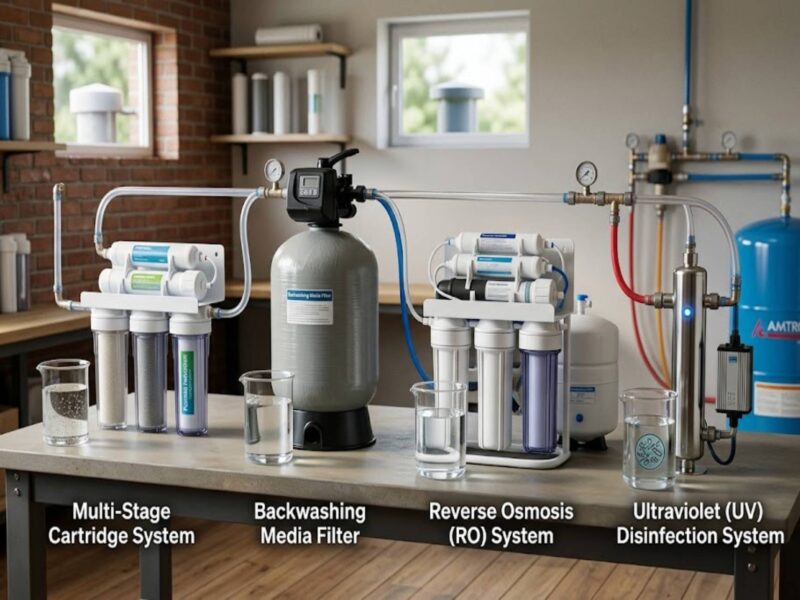
Some private wells may contain contaminants that require more specialized treatment. Depending on test results, homeowners may consider technologies such as ultraviolet disinfection, reverse osmosis, or specialized media filtration.
Ultraviolet systems can be used to control certain microorganisms by exposing water to UV light. Reverse osmosis uses a semipermeable membrane to reduce a wide range of dissolved substances and is often installed at specific points of use, such as a kitchen drinking-water faucet.
These technologies serve different purposes, so they should not be treated as interchangeable. The appropriate method depends on the contaminant, its concentration, the household’s water usage, and the desired level of treatment.
Whole-House vs. Point-of-Use Filtration
Another factor to consider is where treatment should take place.
Whole-house systems treat water before it reaches multiple fixtures throughout the property. This approach can make sense when the water issue affects bathing, laundry, appliances, and drinking water.
Point-of-use systems, on the other hand, treat water at a specific location. A reverse osmosis system under the kitchen sink, for example, may be appropriate when the primary goal is improving water used for drinking and cooking.
The best setup may involve more than one type of filtration. A sediment filter could protect downstream equipment, while another treatment stage addresses a specific dissolved contaminant.
Maintenance Matters as Much as Filtration
Even a well-designed filtration system needs regular maintenance. Filters eventually become saturated with the materials they remove, while some treatment equipment requires cleaning, media replacement, or other servicing.
Neglecting maintenance can reduce performance and may create additional problems within the system. Homeowners should follow the manufacturer’s recommended replacement and service schedule and pay attention to changes in water pressure, taste, odor, or appearance.
It is also worth remembering that filtration does not replace proper well maintenance. The well, casing, cap, surrounding area, and plumbing should all be kept in appropriate condition to help protect the water source.
Choosing the Right Filtration Method
There is no universal “best” filtration method for private well water. The right approach depends on the results of water testing and the specific needs of the household.
A homeowner dealing primarily with sediment may need a very different system from someone facing hard water, iron, microbial concerns, or dissolved contaminants. In some cases, a combination of treatment methods may provide more effective results than relying on one filter.
Starting with a water-quality test makes the decision much easier. Instead of treating symptoms such as bad taste, staining, or cloudy water, homeowners can identify the underlying issue and select equipment designed to address it.
Cleaner Water Starts With the Right Approach
Private well owners have an important role in protecting their household water supply. Regular testing, proper well maintenance, and an appropriately selected filtration system can help address water-quality concerns before they become larger household problems.
The key is to match the treatment method to the actual condition of the water. Sediment filters, carbon systems, water softeners, iron filtration, UV treatment, and reverse osmosis each have different strengths. Understanding those differences allows homeowners to make a more informed decision and build a water treatment approach suited to their property.
Conclusion
Choosing the right filtration method is an important part of maintaining cleaner and safer private well water. Because every well has different water chemistry and environmental conditions, there is no single well water treatment system that works equally well for every household. Water testing should come first so homeowners can identify specific concerns such as sediment, hardness, iron, manganese, microorganisms, or dissolved contaminants. From there, the appropriate combination of filtration technologies can be selected based on the home’s water needs.
Regular filter replacement, equipment maintenance, and routine well inspections are equally important for maintaining consistent performance. By taking a targeted approach to private well water treatment, homeowners can protect their plumbing and appliances while improving the quality, taste, and overall usability of the water throughout their home.




No Comment